
Five Ground-Breaking Works by Irish Authors
Wild nature, raw emotions, and innovative voice

Happy March, everyone! Did you know the Irish Readathon is on? I’ve chosen five novels that I recommend checking out, with quotes from each. With these titles you can explore isolation vs. belonging in a rugged setting, share a flawed character’s raw emotions, go back in time five hundred years where pain, love and longing feel just as real, experience a raucous choir of bickering ghosts, or transcend punctuation to a couple’s inner life.
A Way of Seeing
Hagstone by Sinéad Gleeson (4th Estate, 2024) is about the joys and struggles of living as an artist and the determination it takes to carve out one’s own life.
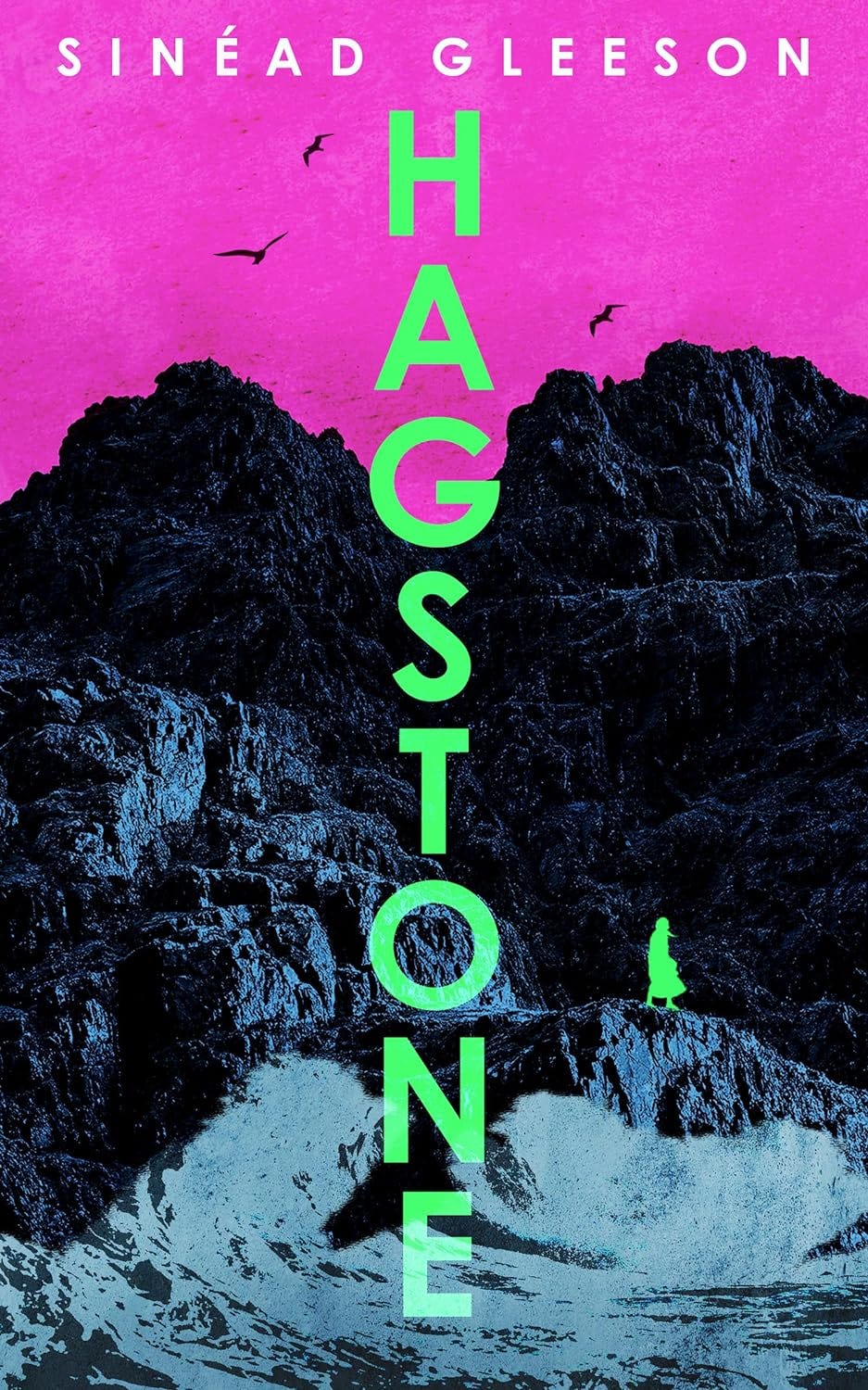
Set on an island with rugged wild beauty, it follows the story of Nell, an artist and outsider trying to make a home there and the Iníons, a commune of women on an isolated hill. Here, nature and character are inextricably intertwined.
This quote reveals a core idea:
‘‘If you look through the hole, you’re meant to see a different view of the world. [...] Looking, seeing, an artist thing.’’
Perhaps this work will lead you to new ways of seeing.
Flawed but Fresh
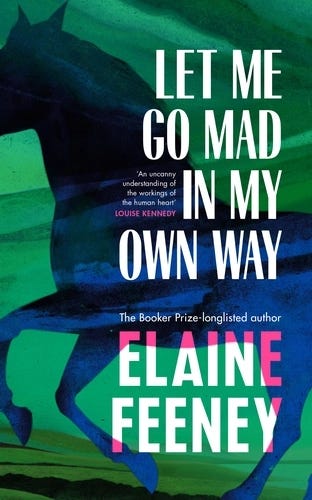
In Elaine Feeny’s novel Let Me Go Mad in My Own Way (Biblioasis, 2025), the protagonist, Claire, is flawed without trying to be likeable, which critics find refreshing. The book has received acclaim for feeling realistic without becoming sentimental as Feeny unravels a compelling story. Propelled by grief to move from London back to her family farm, Claire tries to adjust to living in the west of Ireland, and keep hold of her life as it slowly unravels. Even in times of life-shattering grief, there moments of levity, as in the excerpt below, which occurs just after a funeral.
‘‘She stared at me for the longest time and everything in front of me blurred in a wet canvas, greens and greys and the jolts of lorries, and then she turned right to me, coming close, and she pulled the strands of hair from my face and took my hand.
‘Don’t be nice,’ I said, ‘I can’t bear nice.’
‘I know,’ she said.
‘Do you know?’ I said, taking my hand back, water pooling in my tear ducts and burning. There was a large neon sign for a fuel depot a way off in the distance. ‘Did you know that Lady Gregory gave Yeats bags of presents?’
‘What?’
‘Yes, she did, so he could have gifts to give the locals. She helped him to socialise, helped Yeats, because she thought that these gifts would help enamour them to him because he wasn’t good with people. And they were suspicious of poets.’
‘Who?’ Maire asked, puzzled.
‘The locals. And she bought them odd things, things they would never need—stupid things like glass paperweights, and fancy shawls, pressed flowers, taxidermy, some bottles of sloe gin. But they didn’t like him, they never took to him.’
‘Who?’ she said again and looked bewildered.
‘The locals,’ I repeated.
‘To who?’ Maire said, sounding exasperated.
‘The poet.’
We sat looking out through the car window as bright sunlight broke through the grey sky.
... I stared at Maire’s round face. She hadn’t changed since I could first remember her as an older girl in my primary school. Full of sense and authority, the same girlish ponytail, same small stud in the her red ears like they’d just been pierced for the first time. ‘I’m my whole life hoping they’d show me how to live, Maire, you know, and they didn’t. But Lady Gregory, she minded him, from everyone.’
Through the car window a blooming ditch of brambles faced us and soon summer would come, unpredictable, alive. I had often yearned for it in London, to hear the birds returning, to see the great buffeting sky of the West of Ireland, the drizzle, the violet-purple hue of the grass before hay was cut. I had been so long gone that I wondered if I was astray with a mad nostalgia. The changing time always brought work to the farm growing up, seasons brought work, and I wanted a refuge from the anonymity of the city.’’
Revealed by Detail
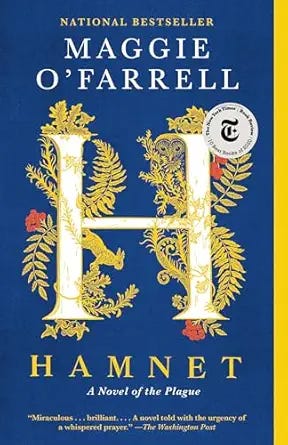
Though she writes of a time so distant to us, Maggie O’Ferrell brings characters to vivid life in Hamnet (Knopf Doubleday, 2021). Scents and textures evoke life in urban and rural England in the 1580s. The book alternates between two parallel timelines starting with Hamnet seeking his family in an empty house and how his grandfather, a glover, settled a debt by making Hamnet’s father teach Latin to boys on a farm, setting events in motion that led to meeting Agnes, Hamnet’s sensitive, solitary, and somewhat unusual mother.
‘‘How frail, to Agnes, is the veil between their world and hers. For her, the worlds are indistinct from each other, rubbing up against each other, allowing passage between them. She will not let Judith cross over.
Mary mutters a string of words under her breath, a prayer, of sorts, an enteraty, then pulls Agnes to her. Her touch is almost rough, her fingers gripping Agnes’s elbow, her forearm pressing down hard on Agnes’s shoulder. Agnes’s face is pressed to Mary’s coif; she smells the soap in it, soap she herself made—with ashes and tallow and the narrow buds of lavender—she hears the rasp of hair against cloth, underneath. Before she shuts her eyes, submitting herself to the embrace, she sees Susanna and Hamnet step in through the back door.
Then Mary has released her and is turning, the moment between them over, done. She is all busines now, brushing down her apron, inspecting the contents of the mortar, going to the fireplace, saying she will bild it up, telling Hamnet to bring wood, quickly, boy, we shall build a great blaze for there is nothing so efficacious to the driving out of fever as a hot fire.’’
A Chorus of Bickering Ghosts
How about something that’s both classic and experimental? The Dirty Dust by Máirtín Ó Cadhain (Sáirséal Agus Dill and Yale University Press, 1949) provides a unique reading experience. First written in Irish, the original title is Cré na Cille.
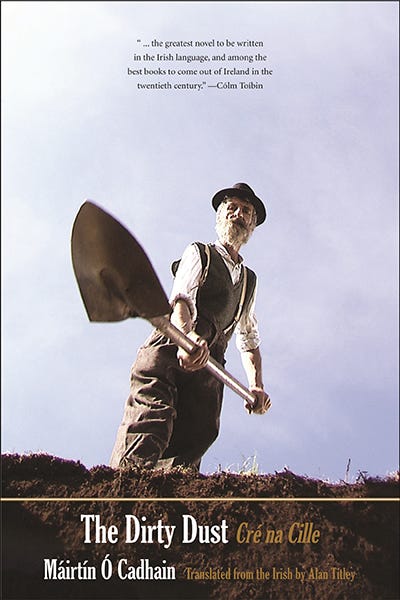
Set in a graveyard, all the characters are dead yet vividly alive as they continue their gossip and rivalry. Caitriona Paudeen has just died but holds onto two grudges: one against her younger sister and one against her daughter-in-law. Hers is the loudest voice as the novel unfolds through dialogue written as a satire of rural Irish faults.
Without descriptions or dialogue tags, reading this can feel like being thrown into a pitch-black room full of strangers, at first. Voices rise and recede, forming an odd sort of chorus until the reader learns to differentiate the characters. There are also a great number of inventive insults, such as ‘a gnat’s fart’, ‘a sailor’s bicycle’ and more.
Quotes:
‘‘—I know the death that I’d have liked for you, ya Greedy Guts, pour pints of porter down your throat until it came out every hole in your body, your nostrils, eyes, ears, under your nails, squelching out of your armpits, your eyebrows, fingers, knees, elbows, through the pores in your scalp, until you sweated seven different kinds of stout...’’
“(I)t’s the insane babble of the dead that holds the true poetry, and Ó Cadhain’s great accomplishment, it seems to me, was to achieve a perfect synthesis of style and subject.” - Kevin Barry, The Guardian
“The book depends on its own rhythmic energy; anyone seeking plot or character development should abandon hope. Slowly, as you read, you realise you have been lured into a fictional universe made up of voices and interruptions, much fragmented talk, non-sequiturs, and then sudden bursts of sheer poetic clarity in which a phrase or a half-sentence takes on a sonorous resonance and has a dark suggestive power. (...) The novel, in Titley’s translation, has a strange mesmeric force.” - Colm Tóibín, The Irish Times
Breaking Rules to Unleash Voice
Or you can try a more recent experimental work that alters the page in new ways. In Eimear McBride’s fourth novel, The City Changes its Face (Faber & Faber 2025), she returns to her characters from The Lesser Bohemians while creating a work that stands alone. The book takes place over the course of one night in 1990s London. To tell their story, she sought unique language for her characters to use, bending the rules of punctuation and spacing to convey emotion and let the voice drip across the page.
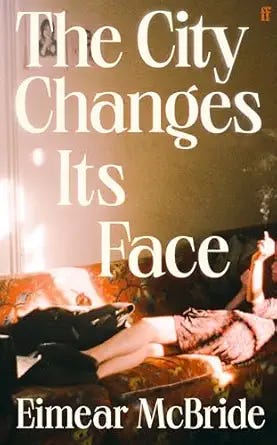
In an interview with Katie Tobin, Eimear said:
‘‘I’m obviously not a plot-driven novelist, it’s all about character... I never write about types of characters. I hate that kind of writing, it’s really tiresome. So, in order to describe each person’s individuality, it’s almost like you have to try and find a specific language to share so that you don’t feel like this is like every other 40-year-old man or every other 20-year-old woman that you’ve ever met. You want to feel that these are people living these lives and behaving in this way. Language has to give the reader access to that feeling, like they are learning about someone and don’t already know everything about them.’’
Here’s an excerpt:
‘‘But.
Then.
A thing.
A catch?
A cough?
An
A
Oh oh my God Grace isitreallyyou?
For an age, for an hour, for a minute or two I couldn’t hear beyond the muffle and was trying so hard to. Staring right into it. Sick with the wait. Wishing to be there and not witnessing like this. Overhearing though, whether I wanted to or not, some vast suspension of disbelief in your voice that I did not recognise. Had not heard before. And I’d heard all your voices—or so I’d thought—from the finest of times as well as the awful. But actually never quite this
Oh oh my God Grace isitreallyyou?
I couldn’t hear the answer, although there must have been one because you didn’t ask again. Except then I realised you were crying. I knew it. As I knew one damp hand secured your towel while the other probably gripped her. And I went from here to there. To that room where she was, perhaps, crying as well.’’
I’ve been reading Hamnet and just started Let Me Go Mad in My Own Way. Hagstone is next on my list.
Which book are you in the mood for reading? Do you have any others you’d like to recommend?
Keep reading, keep writing,
And may your words shine,
Malina Douglas
Iridescent Words

Leprechaun Watercolour by David T. Wenzel